


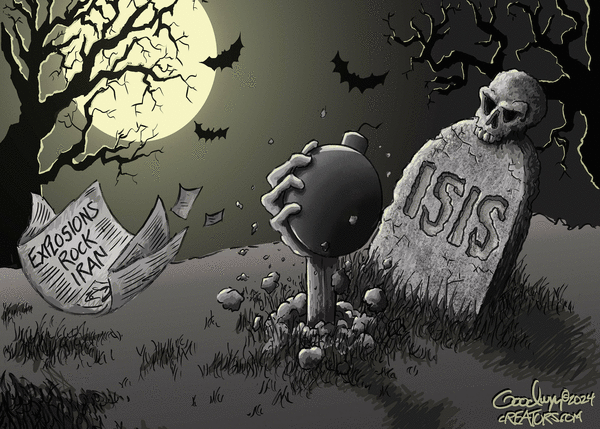
The resurgence of ISIS, highlighted by the recent double suicide bomb attack in Kerman, Iran, has raised questions about the effectiveness of current strategies against terrorism in the Middle East. Under President Trump’s administration, significant progress was made in diminishing ISIS’s presence, notably with the fall of their self-declared caliphate. However, the recent events suggest a possible revival of the group’s activities, bringing into focus the policies of the Biden administration and their impact on the fight against terror groups like ISIS.
The attack in Kerman, which claimed the lives of at least 84 people during a ceremony honoring Iranian Revolutionary Guard Corps Gen. Qassem Soleimani on the fourth anniversary of his death, is considered the worst terror incident in Iran in decades. ISIS took responsibility for this attack through a statement on Telegram, further exacerbating the already volatile situation in the Middle East.
Experts believe that ISIS is attempting to exploit the regional instability that has escalated since Hamas’ terror attack against Israel on October 7. The choice to target the ceremony honoring Soleimani, killed by a US airstrike in Baghdad in early 2020, appears to be a deliberate effort to expand the conflict in the Hamas-controlled Gaza Strip.
Iran’s Supreme Leader Ayatollah Ali Khamenei responded to the tragedy by promising a “harsh response.” The nature of the attack, indicated by the severe damage to the site, suggests that the explosives were designed to cause maximum harm, likely packed with shrapnel.
Eyewitness accounts, such as that of Mohammad Mehdi Ghalekhani, a volunteer with the Revolutionary Guards’ Basij force who was injured in the attack, underscore the suddenness and brutality of the assault. Ghalekhani described the event as “horrific,” reflecting the chaos and shock experienced by those present.
The Kerman attack not only presents a significant security challenge for Iran but also raises critical questions about global counterterrorism strategies. As ISIS appears to regain momentum, the international community is compelled to reassess and potentially readjust its approach to ensure that the gains made against such extremist groups are not reversed.